

10 Signs You Have a Father Wound (And Don't Know It)
Most Women Don't Know They Have One
A father wound (or “daddy issues”) doesn't always announce itself. It doesn't always look like visible trauma or a broken childhood. Sometimes it looks like success. Sometimes it looks like strength. Sometimes it looks like a woman who has everything together and still cannot figure out why she feels so empty inside.
The father wound is subtle. It hides beneath our achievements, our relationships, our coping strategies. And because it formed so early, it often feels less like a wound and more like just who we are.
That is exactly what makes it so powerful, and so important to name.
Sign 1: You Are a Chronic Overachiever
You achieve not because you love the work, but because achievement feels like proof. Proof that you matter, that you are worthy of attention, that you are enough. No amount of success quiets the voice that says you should be doing more. This is one of the most common expressions of the Ghost father, the daughter who learned that being exceptional was the only way to be seen.
Sign 2: Healthy Love Feels Wrong
When someone offers you steady, consistent, uncomplicated love, something in you resists it. It feels boring, suspicious, or like they must not really know you yet. You are more comfortable with intensity, unpredictability, or the chase. This is not a preference. It is a pattern formed by a father whose love was conditional, inconsistent, or absent.
Sign 3: You Over-Apologize and Over-Explain
You apologize for things that are not your fault. You over-explain your choices to preempt criticism. You brace for disapproval in almost every interaction. This is the nervous system of a child who learned that her presence, needs, or emotions were somehow too much, and that making herself smaller kept the peace.
Sign 4: You Cannot Receive Care Without Guilt or Suspicion
When someone does something kind for you, your first response is discomfort. You deflect compliments. You minimize your needs. You feel like a burden when you ask for help. Receiving feels unsafe when you grew up learning that love came with strings attached or did not come at all.
Sign 5: You Stay Too Long in the Wrong Places
Jobs, relationships, friendships you have outgrown. You stay because leaving feels like giving up, like failure, or like abandoning something that might still become what you hoped it would be. The daughter of a Guest father in particular struggles to leave, because she learned that love requires patience and waiting is what good daughters do.
Sign 6: You Have Difficulty with Authority Figures
You either shrink completely in the presence of authority or you are hypervigilant about being controlled. You watch managers, bosses, mentors for signs of approval or disapproval and adjust yourself accordingly. Power feels dangerous, either because it was wielded against you or because you never experienced it being used with care.
Sign 7: You Are the Fixer, the Caretaker, the Strong One
You carry everyone. You manage moods, solve problems, anticipate needs, and swallow your own disappointment without complaint. You are the person others lean on, and you rarely if ever lean back. Being needed has become your identity because, at some point, it was also your safety.
Sign 8: You Struggle to Trust That Good Things Will Last
When life is going well, you wait for the other shoe to drop. You hold your happiness lightly because joy has historically preceded loss. This hypervigilance is your nervous system doing its job, a job it was trained to do by a father whose presence was unreliable.
Sign 9: You Seek Validation from Men in Positions of Power
Whether it is a boss, a partner, a mentor, or even a public figure you admire, you find yourself seeking something from men with authority that goes beyond professional respect. Somewhere in that search is a daughter looking for the approval she never received from the first man who mattered.
Sign 10: You Have Never Grieved Your Father
Not necessarily his death. His absence. His failures. The version of him you deserved and never had. The conversations that never happened. The protection that never came. If you have never sat with that grief, have never allowed yourself to acknowledge what was truly lost, it is likely still running in the background of your life.
Recognizing the Wound Is the First Step
Seeing yourself in this list is not a verdict. It is an opening. The father wound can be healed, but only after it has been named.
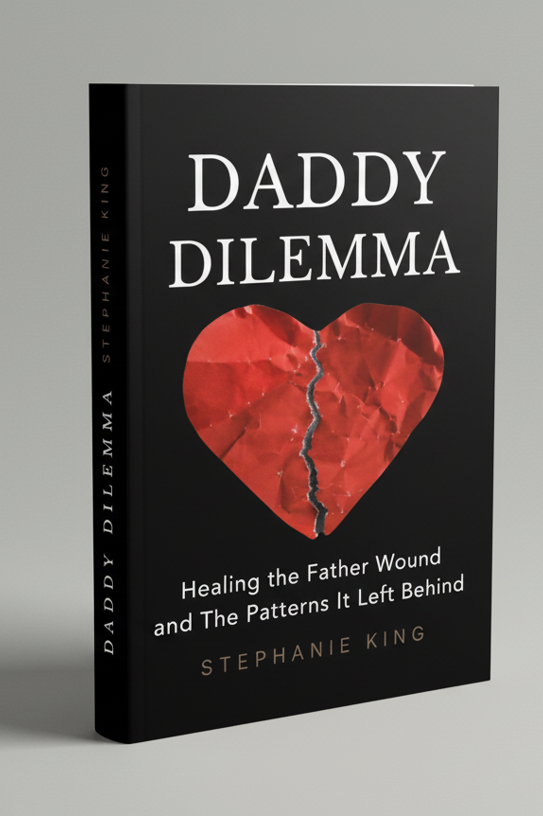
In Daddy Dilemma: Healing the Father Wound and the Patterns It Left Behind, I walk through all eight stages of the Father Wound Cycle and provide a framework for moving from recognition to real, lasting healing.
Ready to go deeper?
Daddy Dilemma: Healing the Father Wound and the Patterns It Left Behind is available now on Amazon in paperback, hardcover, and Kindle.
